Chapter 02 · Occupancy
CAPACITY IN CONTEXT
An occupancy number on its own is a rear-view mirror. This chapter explains how to combine counts with the departure schedule and dwell time so that teams act before the door queue forms.
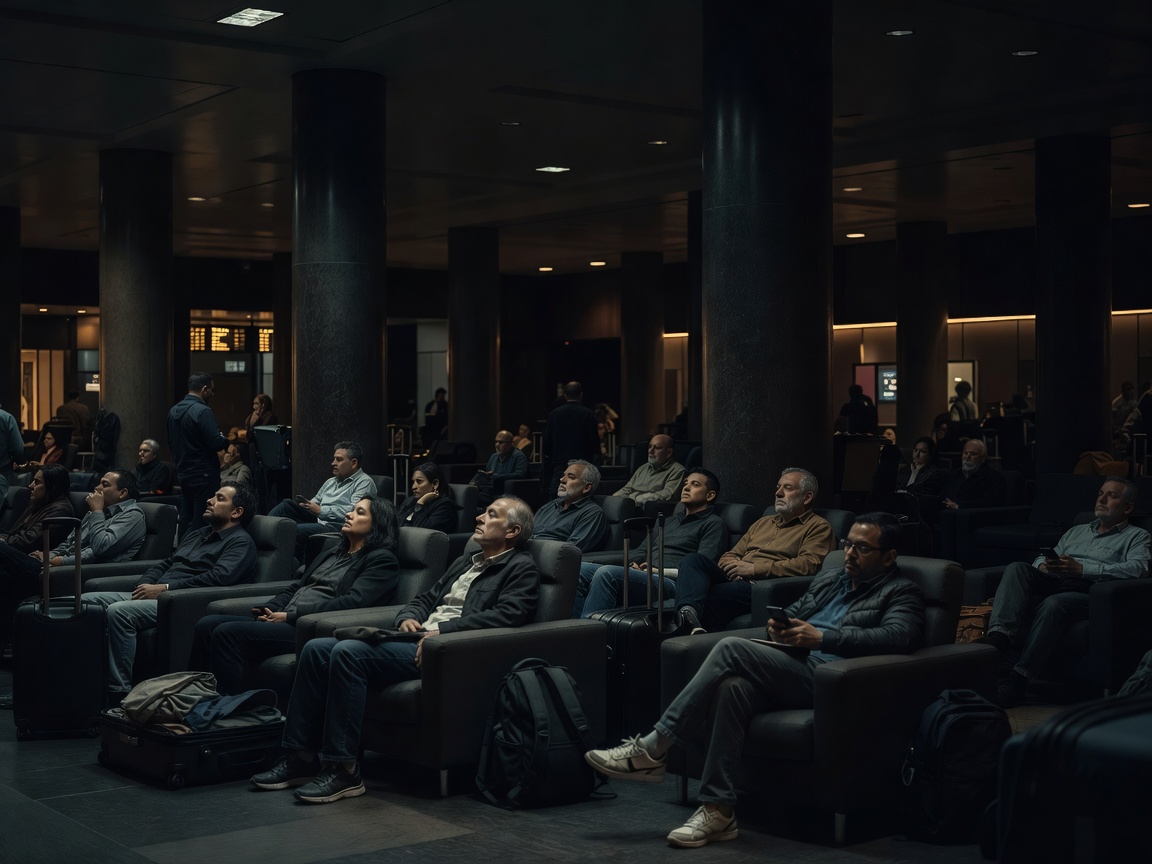
Why counts arrive too late
Occupancy is the result of two flows: guests arriving and guests leaving. Most counting systems measure the first well and the second poorly. People leave in bursts when boarding calls go out, and they stay much longer when flights slip. A room that reads 80% can empty by half in fifteen minutes or fill to the door in the same time, depending on what the flight board is about to do.
That is why the most useful occupancy views show the count next to the departures that will draw guests out, rather than as a single gauge.

Counting methods compared
Each method answers a slightly different question. Combinations are common; accuracy depends heavily on installation and calibration.
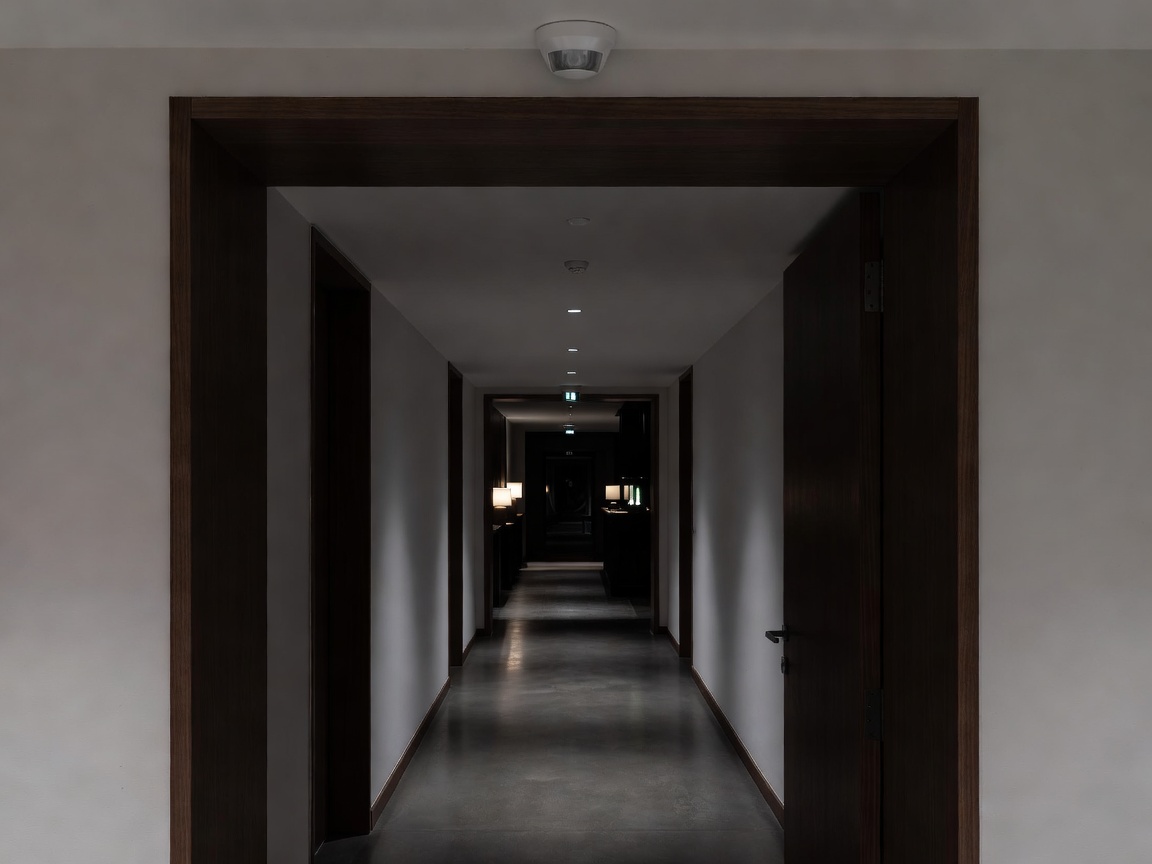 Doorway
Entry and exit sensors
Overhead counters at each door. Simple, but drift accumulates if one door is missed or used by staff.
 Seat
Seat-level sensing
Shows which zones are actually used. Expensive to cover every seat; bags on chairs complicate readings.
 Network
Wi-Fi association
An estimate from connected devices. Useful for trends, unreliable for absolute numbers, and raises device-identifier questions.
Occupancy interpretation table
Readings are examples, not thresholds. Each operator should set its own levels based on fire-safety capacity, staffing and contract terms.
| Reading | Context from flight feed | Likely meaning | Next action |
|---|---|---|---|
| 75%, rising | Several flights boarding within 30 minutes | Peak about to pass | Hold steady; prepare tables for turnover |
| 75%, rising | Multiple delays posted, few boardings | Dwell extending | Brief entry desk on possible walk-in limits; add buffet runs |
| 90%, flat | Normal operations | Counter drift or long-stay guests | Verify with a floor walk before restricting entry |
| 60% overall | One zone near full | Zone imbalance, not capacity issue | Guide arrivals to quieter zones; update signage |
| Sudden drop | Gate change or boarding call | Departure wave | Trigger clearing tasks across vacated zones |
Departure banks and forecasting
Hub airports such as Helsinki Airport, Frankfurt Airport and Amsterdam Airport Schiphol organise many connecting flights in banks, so lounge demand arrives in waves tied to the timetable. A forecast built from the next few hours of departures, the cabin mix of those flights and historical dwell times usually outperforms the live count for planning staffing.
Forecasts improve when the lounge receives estimated rather than scheduled times. EUROCONTROL's Airport Collaborative Decision Making (A-CDM) concept defines shared milestones such as target off-block time, which participating airports exchange among partners. Whether a lounge receives those milestones depends on local integration, discussed in the systems chapter.
When to restrict entry
Restricting walk-in or programme guests protects the experience of those already inside, but it also creates refusals at the desk and complaints afterwards. Clear trade-offs to document: which credential types are restricted first, how the restriction is communicated before the guest arrives at the door, whether a virtual queue or callback is offered, and who lifts the restriction. Restrictions that stay on after the peak has passed are a common, avoidable cause of dissatisfaction.
Privacy limits on counting
Counting does not require identifying anyone. Systems that use cameras fall under the European Data Protection Board's Guidelines 3/2019 on processing of personal data through video devices (version 2.0 adopted 29 January 2020), and Wi-Fi methods may process device identifiers. Prefer methods that produce counts at the edge and discard raw data, and record the lawful basis in the operator's privacy documentation.
Capacity checklist
- The occupancy view shows departures for the next 60–90 minutes alongside the count.
- Counters are reconciled against a floor walk at least once per shift.
- Zone-level readings exist for rooms with distinct uses.
- Entry restriction levels and lift conditions are written down.
- Counting methods have a documented privacy assessment.
Sources and dates
- EUROCONTROL, Airport CDM Implementation Manual (A-CDM milestones), consulted January 2026.
- European Data Protection Board, Guidelines 3/2019 on processing of personal data through video devices, v2.0, 29 January 2020.
- Regulation (EU) 2016/679 (GDPR), applicable from 25 May 2018.
- Finavia, Fraport and Royal Schiphol Group published timetable and terminal information, consulted January 2026.