Chapter 01 · Access systems
ADMISSION WITHOUT GUESSWORK
The entry desk makes one of the fastest decisions in the airport: admit, admit with conditions, or refer. This chapter takes that decision apart so service teams and technology buyers can see which data it depends on.

What the desk is really deciding
From the passenger's side, entry looks like a single scan. From the operator's side, at least five questions are answered in a few seconds: is this the person on the credential, is that credential eligible for this lounge, is the visit inside the permitted time window, may they bring guests, and is there room. Each question draws on a different source, and each source has its own owner, update cycle and error rate.
When people complain that lounge access "feels random", they are usually describing a disagreement between those sources rather than a bad decision by staff.
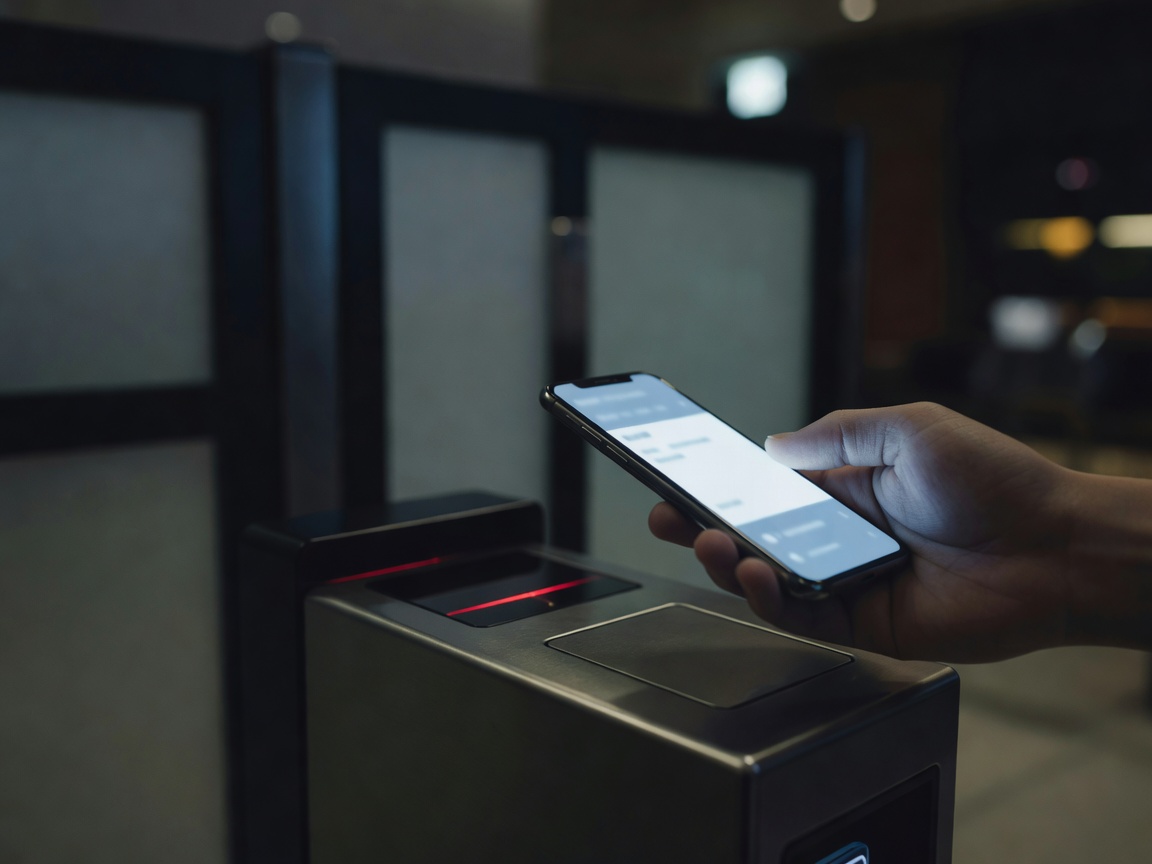
The decision, as a diagram
The sequence below is a generalised model drawn from published standards and operator interviews. Real configurations vary by operator and contract.
- 1 · Scan the credentialA boarding pass barcode under IATA Resolution 792 (BCBP), a membership card or digital pass, or a booking voucher.
- 2 · Parse the fieldsPassenger name, booking reference, operating carrier, flight number, Julian date, cabin code, seat and frequent-flyer data where present.
- 3 · Look up entitlementAirline cabin rules, status tiers and alliance agreements, programme networks such as Priority Pass, LoungeKey or DragonPass, or a paid pre-booking.
- 4 · Check the time windowMany lounges admit only within a set period before departure; a delay posted in the flight feed may extend it.
- 5 · Check capacityCurrent occupancy and any restriction on walk-in or programme guests at that moment.
Admit
All sources agree. Record entry time and guest count.
Admit with note
Eligible, but with a condition: guest fee, time limit, zone restriction.
Refer
Sources disagree or data is missing. A supervisor decides and the reason is logged.
Credential types at a glance
 Airline
Boarding pass
Carries cabin and flight but not always status. Entitlement often needs a second lookup in the carrier's loyalty system.
 Programme
Membership pass
Programmes such as Priority Pass, launched in 1992, validate against a network database. Visit fees and guest rules come from the programme contract.
 Booking
Pre-booked entry
A paid slot. Arrival time matters, and a no-show policy has to meet the same flight-delay logic as everyone else.
Where the chain breaks
Codeshares. A ticket sold by one carrier and flown by another can carry a marketing flight number that the lounge rules do not recognise. Eligibility typically follows the operating carrier, so the entry system must resolve both.
Name formats. BCBP name fields are truncated and transliterated. Matching them strictly against a membership record produces false refusals; matching them loosely weakens identity checks. Operators choose a tolerance and should document it.
Irregular operations. When flights are delayed, time-window checks built on scheduled times reject people who are entirely entitled. The entry rule should read estimated departure from the flight feed, not the timetable.
Offline moments. If the entitlement service is unreachable, the desk needs a written fallback: a manual list, a temporary admit-and-reconcile rule, or a hold. Choosing in advance avoids improvisation at the busiest moment.
Trade-offs buyers should weigh
Self-service gates reduce desk workload for routine cases and can free staff for welcome and recovery work. They also concentrate the exceptions at a smaller staffed point, and they must remain usable for passengers with disabilities. The European Accessibility Act, Directive (EU) 2019/882, applies from 28 June 2025 to a range of services and terminals in passenger transport, so accessibility belongs in the specification rather than in a later fix.
Boarding pass contents are personal data under the GDPR. Storing full barcode strings "in case they are useful" conflicts with data minimisation. Keep what the entry record needs — time, credential type, outcome, reason code — and set a retention period.
Entry checklist for service leads
- Entitlement rules are written down per credential type, with an owner for each.
- The entry system resolves operating and marketing carriers on codeshares.
- Time windows read estimated departure times from the flight feed.
- Every refusal records a reason code and is reviewable the same day.
- An offline fallback is agreed and rehearsed.
- Gates and desks have an accessible alternative path.
- Stored entry data has a defined purpose and retention period.
Sources and dates
- IATA, Resolution 792 — Bar Coded Boarding Pass (BCBP) standard; IATA set an industry target of 100% BCBP by end of 2010.
- Regulation (EU) 2016/679 (GDPR), applicable from 25 May 2018, Article 5 principles.
- Directive (EU) 2019/882 (European Accessibility Act), applicable from 28 June 2025.
- Collinson, Priority Pass programme history (programme launched 1992).
- oneworld, Star Alliance and SkyTeam published lounge access policies, consulted January 2026.